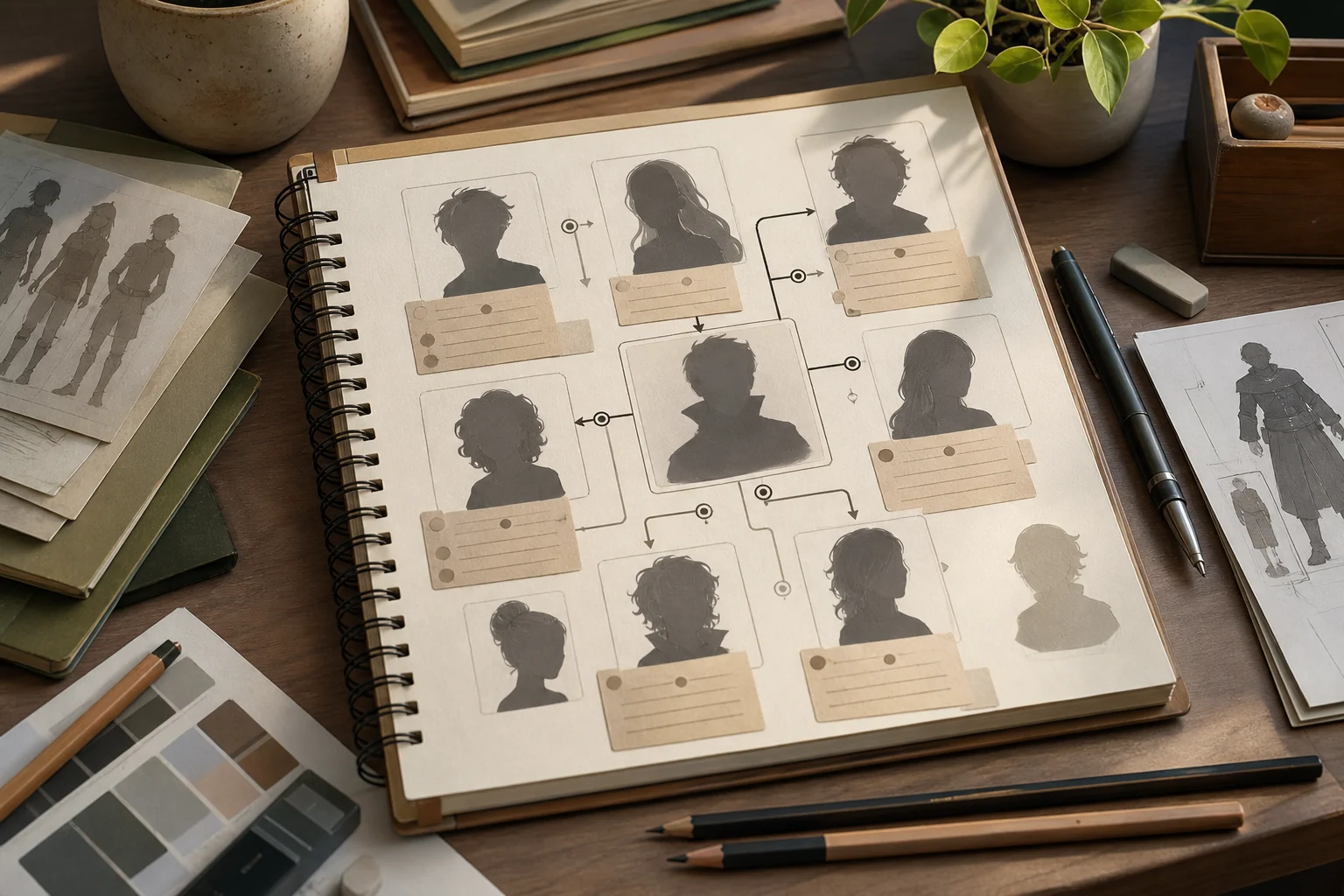
The reader task behind the search
Someone searching this topic usually wants a draft direction, not a lecture. They need a concrete way to turn a familiar fanfic instinct into a usable first chapter. For this page, the core task is to help writers who need character roles that create scenes instead of static profiles.
That means the article should do more than name a trope. It should help the reader choose the pressure system, the first relationship move, the scene boundary, and the reason the next chapter still matters.
The mechanics worth choosing before you draft
The strongest setup here depends on a visible want, a private contradiction, and a relationship pressure point. When those choices are clear, the generator has enough structure to produce a chapter with a beginning, a turn, and a reason to continue.
Pressure system
Define what pushes the protagonist now: a visible want. This turns the idea into a story engine instead of a mood label.
Relationship move
Pick what changes between people first: a private contradiction. A scene lands better when the emotional movement is visible.
Continuation hook
End the first draft with a relationship pressure point. The reader should know what question chapter two will answer.
Common mistakes to avoid
The fastest way to weaken this setup is building a long biography before deciding what the character does under pressure. A good first chapter should create consequence, not only decorate the premise with familiar labels.
- Starting with lore before the reader knows what the protagonist wants.
- Letting the trope replace a concrete scene goal.
- Making every relationship static until the final paragraph.
- Using a recognizable protected scene as a shortcut instead of building an original pressure point.
How to turn it into a private draft
Choose one prompt card below, then let Studio fill the fanfic controls for you. You can edit any field, but the important parts are already there: story-world vibe, character roles, relationship dynamic, trope, AU, POV, rating, chapter length, and creative direction.
Generate original roles and traits; do not clone living people, actors, idols, or protected characters.
Prompt lab: turn the idea into a private draft
Use these as starting mechanics, not finished scenes. Choose one setup, change the details, and draft an original scene with a clear decision and consequence.
The helpful liar
Someone helps for a reason they refuse to name.
- Emotional question
- Is help still help when motive is hidden?
- Scene starter
- Open after the lie saves the scene.
- Boundary
- Use original roles.
The blunt rival
The rival tells the truth in the least kind way possible.
- Emotional question
- Can cruelty carry useful truth?
- Scene starter
- Start with a correction nobody asked for.
- Boundary
- No character cloning.
The quiet observer
One person notices the pattern before the protagonist does.
- Emotional question
- Is being seen comfort or threat?
- Scene starter
- Open with a small detail noticed aloud.
- Boundary
- Avoid real-person likenesses.
The contradiction test
A character breaks their own stated rule.
- Emotional question
- What does the exception reveal?
- Scene starter
- Start at the rule break.
- Boundary
- Keep it original.
After the analysis
Open Studio with this setup
The article has done the planning work. Start from the prefilled private-draft setup, adjust any field you want, and press Generate when the premise feels right.
Rights and attribution boundary
This is an original character-building guide. Use Fanfic Studio for private original drafting. Do not copy protected prose, imply official affiliation, or republish someone else's work.
Use this page for commentary, planning, and private original drafting. External works stay with their authors and platforms. Do not publish material you do not have rights to use.